

If you feel constantly wired, distracted, and emotionally flat, it’s probably not “just stress”—it’s how you’re using your screens. Daily digital overload and AI-saturated feeds are pushing people to look for a calmer, more intentional way to live online. In 2026, “mindful tech use” is emerging as one of the most talked-about self-improvement and wellness trends because people are tired of being exhausted by their own devices.
Mindful tech isn’t about throwing your phone in the ocean; it’s about reclaiming your attention, energy, and emotional life while still living in a connected world. It’s the shift from “consume everything” to “curate what truly serves me.”

Why Mindful Tech Use Is Exploding in 2026
Several cultural shifts are making mindful tech use one of the hottest wellness topics this year.
- People are hitting a wall with digital fatigue, endless feeds, and constant notifications, which are linked to stress, anxiety, and lower focus.
- The wellness world is moving away from gimmicky hacks and toward science-backed habits that actually improve sleep, mental health, and focus.
- Emotional “fitness” is becoming as important as physical fitness, and tech habits are now seen as a key pillar of emotional resilience.
In other words, people are no longer impressed by who is “always online”; they’re impressed by who can stay present, focused, and emotionally grounded in a noisy, hyperconnected world.
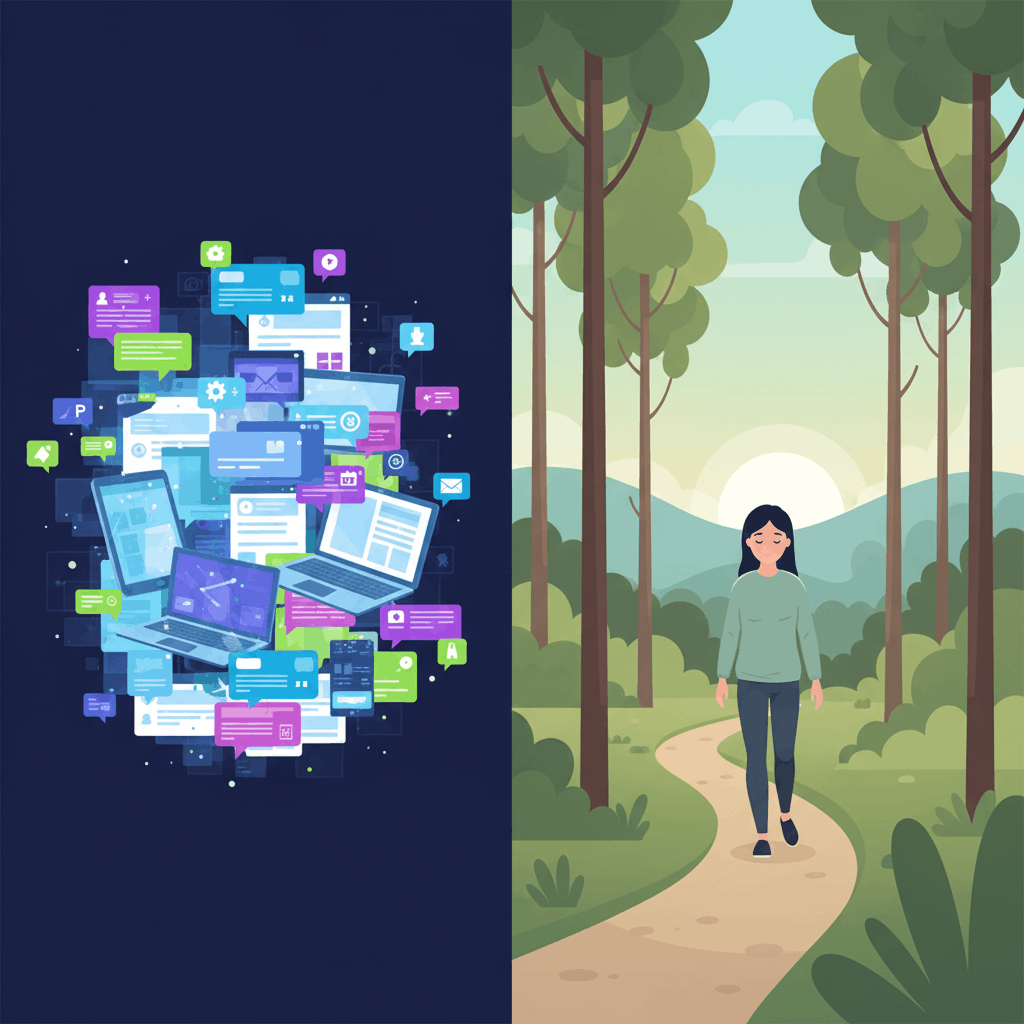
The Cost of Staying Always-On
You don’t need a lab study to feel what constant scrolling does to you—but research and expert commentary back it up.
Common side effects of unconscious tech use include:
- Fragmented attention: Your brain gets trained to think in micro-bursts, making deep work and real conversation harder.
- Emotional numbness: Constant stimulation blunts your ability to feel simple joy, stillness, or satisfaction without a screen.
- Sleep and energy problems: Late-night screen time and irregular rhythms disrupt sleep quality and daytime focus, which many wellness experts now flag as core issues.
This is why 2026 wellness trends lean heavily toward connection, circadian-friendly routines, and “slow” self-improvement—habits that restore instead of deplete you.
The Mindful Tech Reset: A Simple 3-Part Framework
You don’t need a 30-day detox; you need a reset you can actually live with. Think in three layers: Awareness, Boundaries, Rituals.
1. Awareness: See Your Real Tech Life
For 3 days, quietly observe how you use your devices.
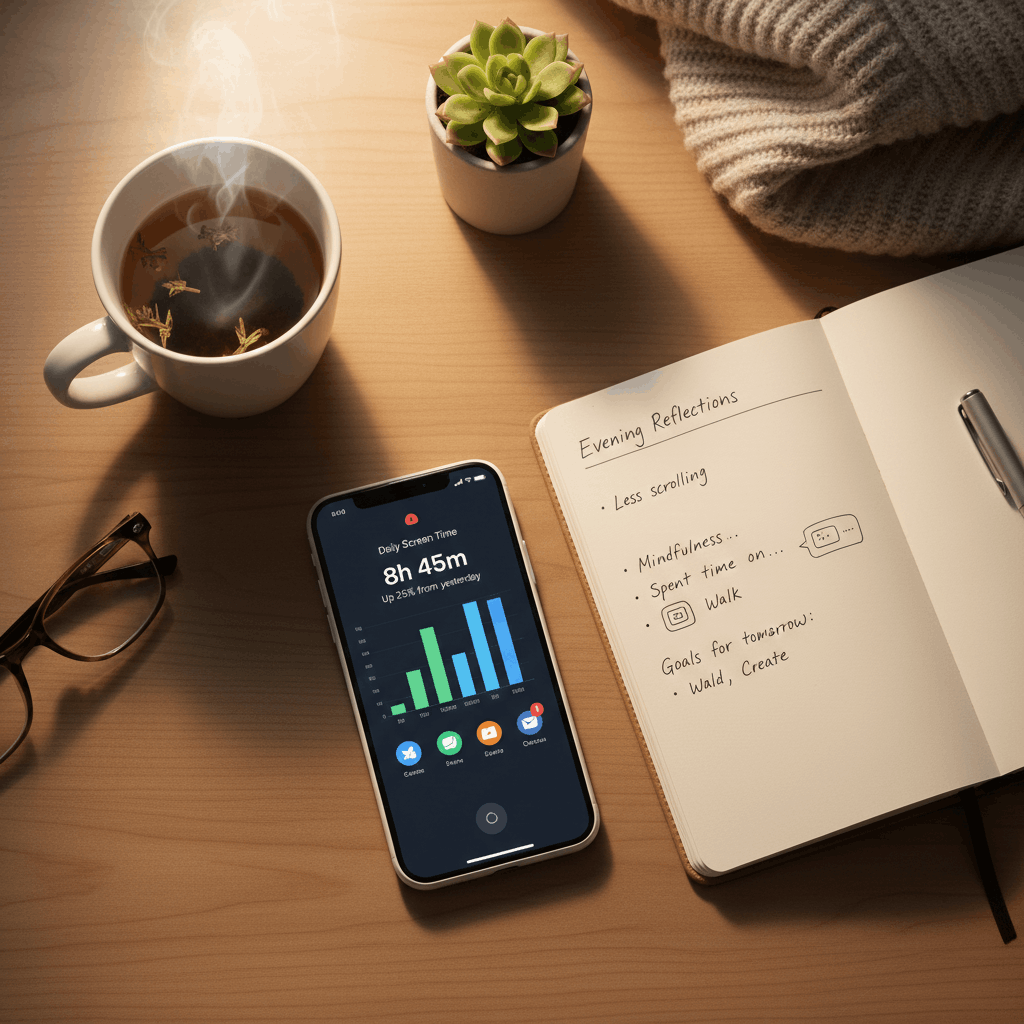
- Turn on Screen Time / Digital Wellbeing tracking.
- Note moments you pick up your phone: bored, anxious, procrastinating, lonely.
- Ask: “Did this make me feel better or worse afterward?”
Journaling prompts:
- “When do I feel most drained by my phone?”
- “Which apps genuinely improve my life right now?”
2. Boundaries: Decide Your Non-Negotiables
Instead of vague “less screen time” goals, create 3 clear rules that fit your life. Examples:
- “No phone for the first 30 minutes after waking.”
- “Social media only between 6–7 pm.”
- “Laptop stays out of the bedroom.”
Make them small enough that you can keep them even on your worst day. Tiny, consistent boundaries are exactly the kind of micro-habits experts expect to dominate in 2026.
3. Rituals: Replace, Don’t Just Remove
If you simply remove screen time without adding something nourishing, you’ll slide back into old habits.
Try building “anchor rituals” around your day:
- Morning: 5 minutes of movement, sunlight, or journaling before checking your phone.
- Midday: 10-minute walk without headphones, just noticing your surroundings.
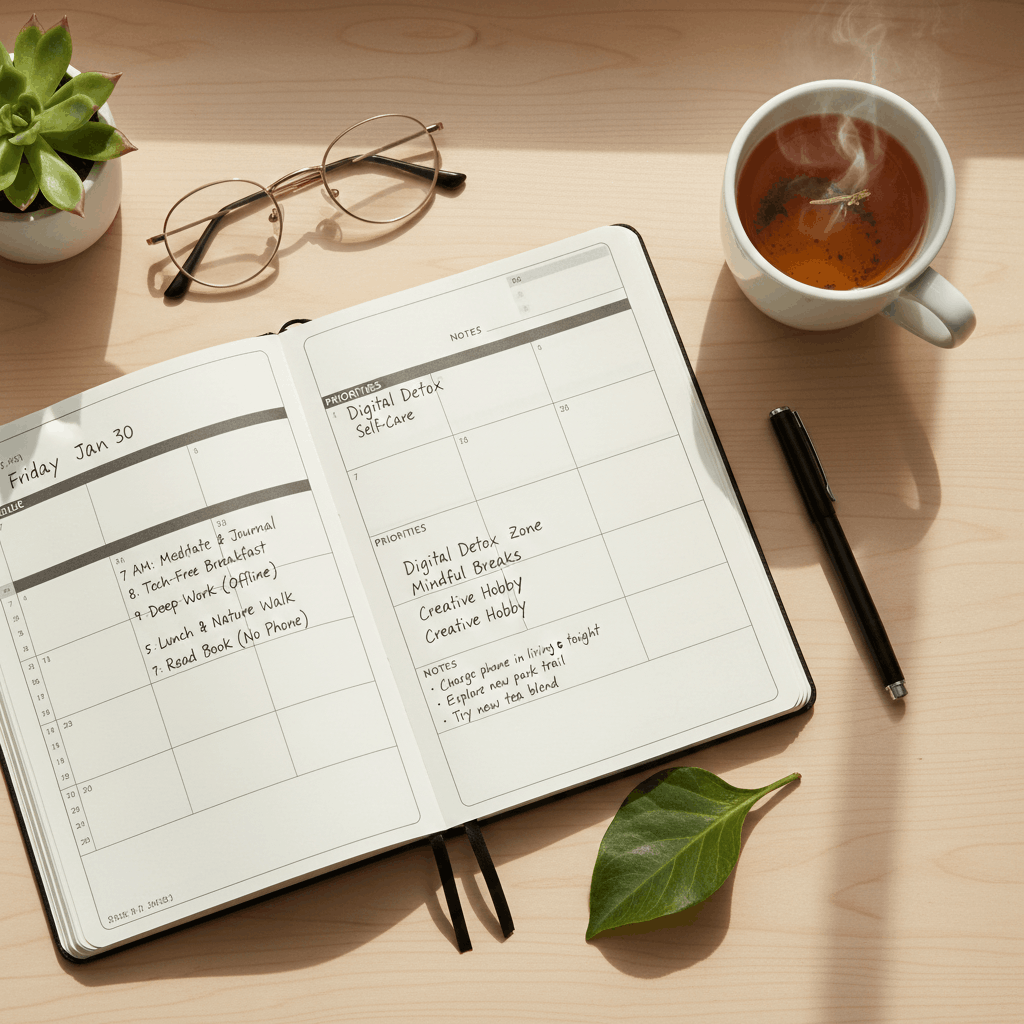
- Evening: A “tech off” ritual—dim lights, make tea, read 5 pages of a book.

Designing Your Ideal Screen Day
Instead of asking, “How do I use my phone less?”, try: “What does a mentally healthy, focused, and connected day look like for me?”
Walk through this simple exercise:
- MorningHow do you want to feel in your first hour—rushed, or grounded?What’s one tech boundary that would protect that feeling?
- WorkdayWhen do you need deep focus most?Could you schedule 1–2 “focus blocks” with notifications off and devices on Do Not Disturb?
- EveningWhat helps you truly unwind—movement, conversation, reading, creativity?How can you make it easier than scrolling (e.g., book on the nightstand, yoga mat already laid out)?
Mini template you can reuse:
- My “tech-free” moments: __________________
- My focus blocks: __________________
- My wind-down ritual: __________________
Emotional Fitness in a Hyperconnected World
Mindful tech use isn’t just about productivity; it’s about emotional fitness. Experts expect emotional skills like self-awareness, boundaries, and resilience to become mainstream priorities in 2026, right alongside strength training and nutrition.
A few emotional fitness practices that pair perfectly with mindful tech:
- Name your state before you pick up your phone: “I feel anxious/bored/lonely.”
- Ask: “What am I hoping this app gives me right now?” (Connection, escape, validation, inspiration.)
- Replace at least one “doom scroll” session with a genuine connection: a call, a voice note, or a walk with a friend, aligning with the growing focus on connection and community in wellness.
Over time, you train your brain to reach for real regulation—movement, rest, connection—instead of endless stimulation.

Conclusion
Mindful tech use is trending in 2026 because people are finally admitting an uncomfortable truth: our devices are amazing, but our default habits with them are not. The new flex is not being constantly available—it’s being present, intentional, and emotionally steady in a world that profits from your distraction.
Start small. Track your patterns, set three clear boundaries, and build a couple of simple rituals that make your offline life more satisfying than your feed. As you do, you’ll notice something subtle but powerful: your focus sharpens, your mood stabilizes, and your days start to feel like they belong to you again, not your notifications.