
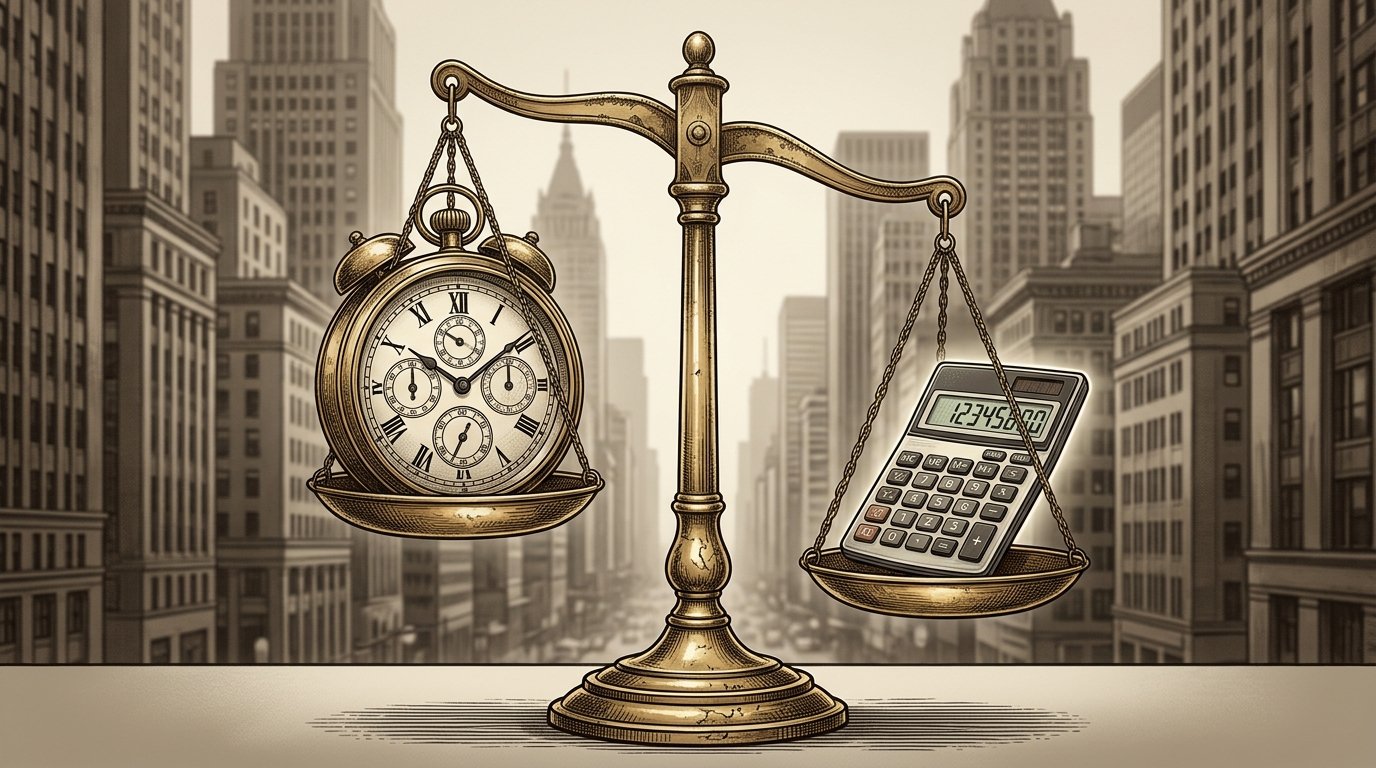
September 15, 2008, marked Lehman Brothers' entry into bankruptcy, the largest in U.S. history. This moment is a stark reminder that prestige and history do not guarantee financial stability. Lehman Brothers should be seen as a warning, not a model, for investors. Its collapse underscores the importance of scrutinizing a firm's financial health over its reputation.
Investing in Lehman Brothers starts with one hard no
September 15, 2008, marked the day Lehman Brothers entered bankruptcy, the legal process where a firm unable to meet its debts seeks court management, in New York. My argument is straightforward: Lehman Brothers is not a smart template for investors and should be seen as a warning. On that day, it filed the largest bankruptcy in U.S. history.
This is a judgment, not a neutral history.
Lehman had prestige to sell. Founded in the mid-nineteenth century, it evolved from a general store into a commodities brokerage and then an investment bank, ultimately becoming the fourth-largest investment banking house in the country.
**Why it matters:** If you are deciding whether a famous financial name deserves your trust, start with the end state. A long record and elite status do not erase a collapse this final.
I do not think investors should admire Lehman as a model. The lesson worth taking is narrower and harder: a celebrated institution with a long history still filed for bankruptcy in 2008, and that fact should govern how you read the name now.
Investing in Lehman Brothers looked brilliant until it broke
September 10, 2008, is the date that matters, because by then the old success story was already overwhelmed by the balance sheet, and Lehman Brothers should not be treated as an investment model. According to wikipedia.org, Lehman reported losses of $2.8 billion in the second fiscal quarter of 2008 and moved to raise $6 billion by selling new shares that day.
- In 2008, Lehman had assets of $680 billion supported by only $22.5 billion of firm capital.
- Its debt-to-equity ratio, the ratio of assets to owners’ equity, rose from about 24:1 in 2003 to 31:1 by 2007.
- In the first half of 2008 alone, Lehman stock lost 73% of its value.
- In the early 2000s, Lehman increasingly invested in derivatives and subprime mortgages, which are home loans made to weaker borrowers.
- The collapse was largely due to that subprime mortgage exposure and to less liquid assets that were harder to sell when funding tightened.
- In 1929, Lehman helped establish AVCO, later American Airlines.
- Robert Lehman served on the board of and backed Pan American Airways Corporation.
- In the 1920s, Lehman advised on the Keith-Albee and Orpheum theater merger that became RKO.
- It also issued the initial public offering, the first sale of a company’s shares to the public, of Allan B. DuMont Laboratories.
- In 1929, the firm created the Lehman Corporation, a closed-end investment company, a fund with a fixed number of shares.
That list is the whole case in miniature.
If you are deciding whether a famous financial name deserves trust, watch the mechanism, not the mythology. Earlier financing skill in aviation, entertainment, and public offerings was real, but it does not offset a later structure that left too little capital under too many assets when losses arrived.
Investing in Lehman Brothers still tempts smart people
Lehman Brothers should not be treated as an investment model, but this is the strongest counterargument section, and it deserves to be stated fairly. According to hbs.edu, Lehman’s history over a century and a half reflects the role of investment banking in the development and growth of the U.S. economy.
A reasonable person can admire that long run because it was tied to real scale and reach. Before its bankruptcy in 2008, Lehman was the fourth-largest investment bank in the United States, with about 25,000 employees worldwide.
A firm does not shape the U.S. economy for a century and a half by being trivial.
The case gets stronger when you look at where Lehman put money and attention. Lehman Brothers helped establish AVCO in 1929, a company later tied to American Airlines. Robert Lehman served on the board and was a backer of Pan American Airways Corporation.
That matters for investors because institutions earn admiration by helping build industries that outlast any one deal. Lehman also evolved from a general store to a commodities brokerage to the fourth-largest investment banking house in the country, which shows unusual institutional range and staying power.
Investing in Lehman Brothers fails even the fair defense
September 15, 2008 is enough to sink the fair-defense case. According to wikipedia.org, Lehman Brothers filed the largest bankruptcy in U.S. history on that date, with more than US$600 billion in assets in the petition.
That matters because the charitable version of the story says Lehman was a respectable firm caught in a bad market. The record is harsher: in the early 2000s, Lehman Brothers increasingly invested in derivatives and subprime mortgages.
A derivative is a contract whose value depends on some other asset or price. That structure can be useful, but when a firm piles it on top of weak mortgages, losses stop being isolated and start feeding each other through pricing, funding, and forced sales.
The fair defense fails on mechanism.
- Lehman increased exposure to subprime mortgages in the early 2000s.
- Its collapse was largely due to involvement in the subprime mortgage crisis and exposure to less liquid assets.
- The parent company remained in liquidation until September 28, 2022.
That sequence is not bad luck. It is a business choosing assets that become hard to sell when confidence breaks, then discovering that “value” on paper does not mean cash in hand when everyone heads for the exit at once.
If you are evaluating any investment that asks you to excuse a blowup as unfairly judged, check what sat on the balance sheet and how saleable it was under stress. When the same exposures show up at the start of the build and at the center of the collapse, fairness is the wrong lens; causation is the right one.
Lehman is a warning, not an investing model
September 15, 2008, settles it. Lehman Brothers is a warning for investors, not a model, because the record ends with the largest U.S. bankruptcy filing after years of high debt-to-equity ratio, thin capital, and heavy exposure to subprime and less liquid assets.
Treat the name as evidence that prestige fails when the balance sheet breaks.
Key takeaways
- Start with the end state: Lehman filed for bankruptcy in 2008, and that fact outweighs its age, reach, and status.
- Watch the mechanism, not the mythology. Assets of $680 billion against $22.5 billion of capital and a debt-to-equity ratio rising to 31:1 told the real story.
- Do not let old wins in aviation, entertainment, or public offerings override later risk choices in derivatives and subprime mortgages.
- If you are judging a financial firm today, check capital, debt-to-equity ratio, and asset liquidity before you trust the brand.
- Use the long liquidation through September 28, 2022, as a reminder that failure at this scale keeps compounding long after the headline day.
Sources
- 1. [Bankruptcy of Lehman Brothers - Wikipedia]( https://en.wikipedia.org/wiki/Bankruptcy_of_Lehman_Brothers)